

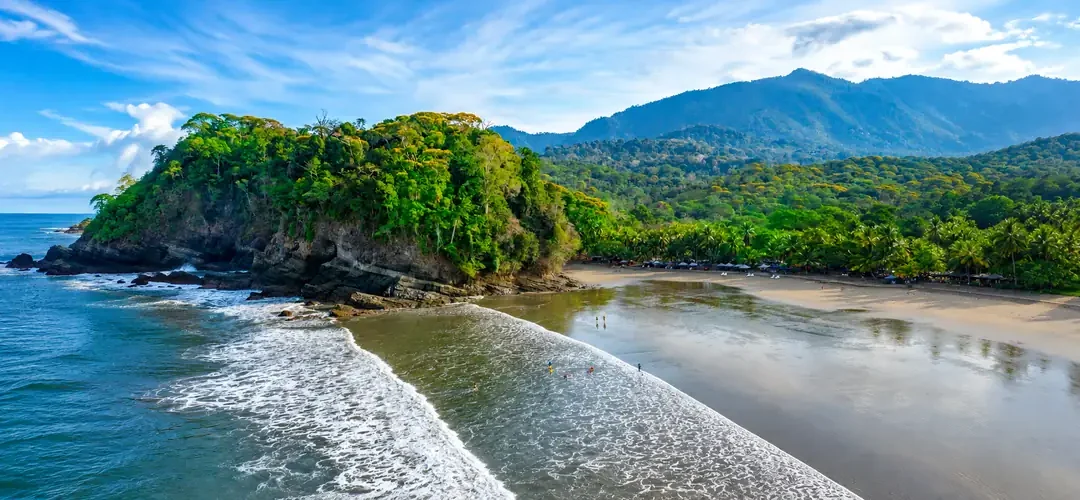
The best beaches near Ojochal are Playa Ventanas, Playa Tortuga and Playa Uvita, all a short drive on paved road from Ojochal Gardens. Ventanas has two sea caves that open at low tide, olive ridley turtles nest at Tortuga from July to December, and the whale tail sandbar at Uvita surfaces twice a day.
Imagine a beach where the tide pulls back far enough that you can walk into a sea cave, stand inside the rock, and hear the next wave arrive through it. That is Playa Ventanas. At the edge of town, Playa Tortuga runs long and flat and goes quiet five minutes into the walk. Up the coast at Uvita, a sandbar shaped like a whale’s tail lets you walk out with ocean on both sides until the tide takes it back.
At Ojochal Gardens you are a stone’s throw from some of the best beaches in the southern Pacific of Costa Rica, and every road you drive to reach them is paved. No dirt road, no 4×4 required.
Discover three of our favorite beaches, each one right for a different kind of afternoon, and what our team can set up before you even arrive.
Ready to book your stay? Check availability for your dates, and we’ll help you plan the rest.
The best beaches near Ojochal: An overview
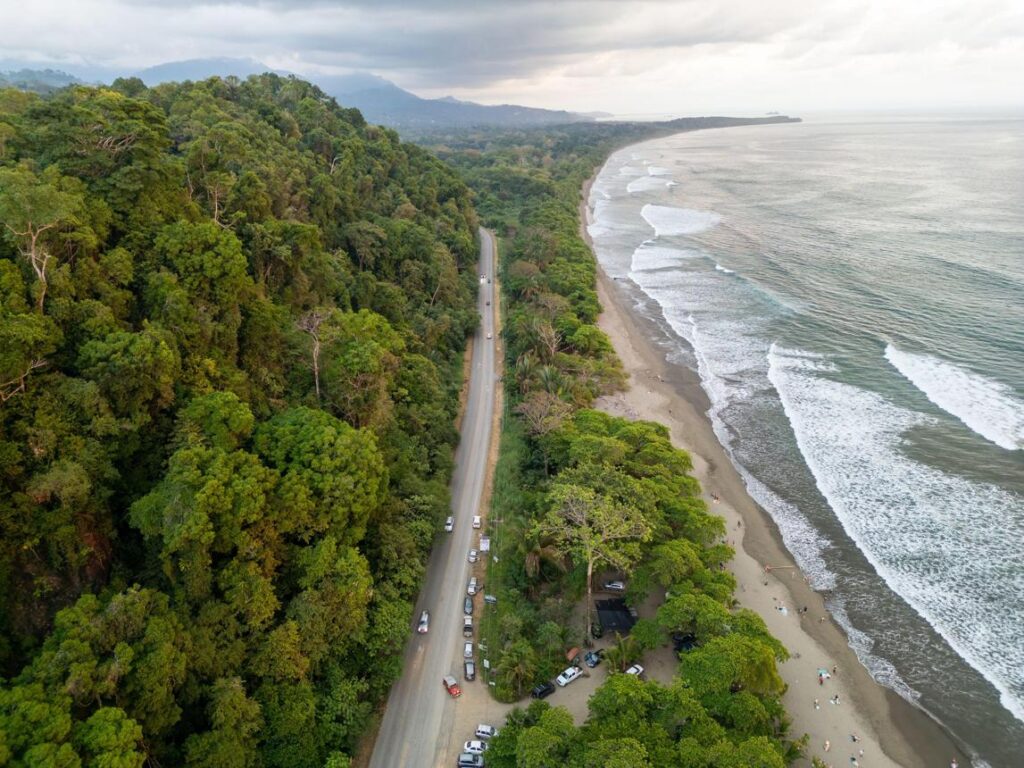
There are scores of spectacular beaches that dot the Costa Ballena, so beach-goers will have no trouble finding ample places to soak up the sand, sun and sea. If you’re looking for a few of our top choices within easy reach of Ojochal Gardens, here’s where to start:
- Playa Ventanas is a cove with two caves cut into the rock at its north end; during low tide, you can venture inside.
- Playa Tortuga is a long flat strip where olive ridley turtles come ashore between July and December.
- Playa Uvita runs out into the Pacific and widens into a sandbar shaped like a whale’s tail, which surfaces and goes under twice a day. Don’t miss Uvita when the humpback whales are visiting!
If clear water matters more to you than long sand beaches, snorkeling near Ojochal sets out where the visibility holds up, and that’s just the start of all the things to do near Ojochal.
Now let’s take a closer look at our three favorite beaches close to Ojochal Gardens:
Playa Ventanas, the beach with the sea caves
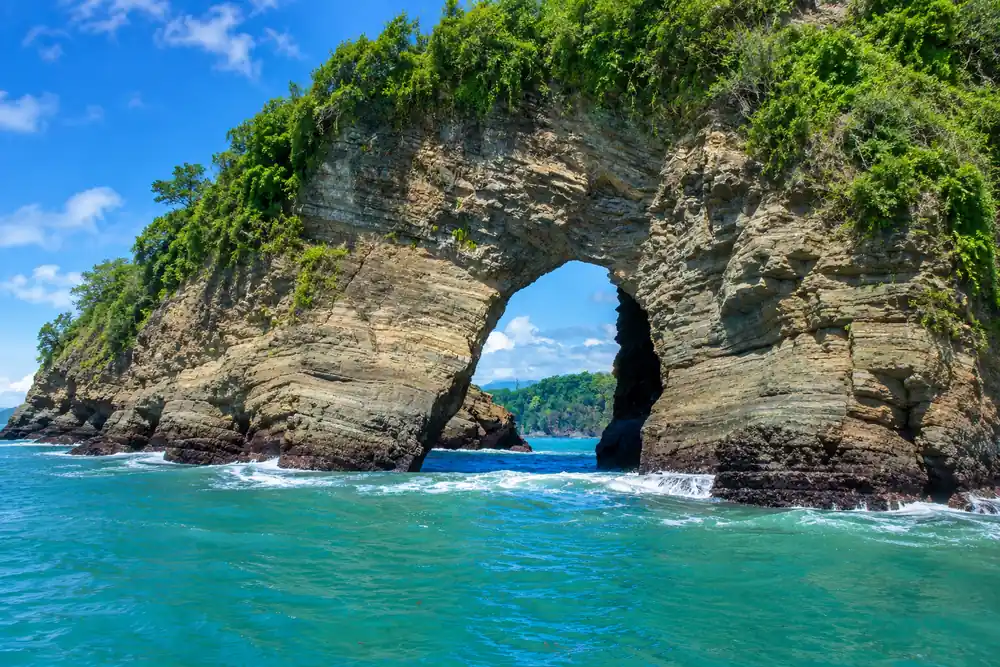
Ask us which beach to start with and we’ll likely send you to Playa Ventanas for the sea caves. The caves on the north end of the beach cut into the base of a hill so steep the jungle grows down to the rock.
Twice a day the water backs off far enough to let you walk in and explore at low tide. The bigger of the two caves is on the right, and you get 15 to 20 feet in before the rock closes down. Go far enough and you can see the far opening from inside, a bright slot at the end of the dark. Inside, the sound doubles. One drag comes off the sand behind you, the other from behind the rock, where the tunnel opens again on the ocean side.
The ocean-side opening is why the tide matters. Waves come through it fast. Go into the caves at Playa Ventanas on a falling tide, and stay out once the water turns.
You walk this beautiful beach end to end in a few minutes, less than 500 meters of dark sand with jungle and palm trees standing behind it. At the southern end the tide leaves pools between the rock formations, each one holding whatever the water forgot, and your kids will find them whatever you had planned.
On weekends and holidays this beach is popular with local families, who come down with coolers and stay the day, and vendors sell food from stalls on the sand beside the parking area. Come on a weekday morning to avoid the crowds.
When to go: Visit Playa Ventanas around low tide, and check the tide chart the night before. NOAA puts the shift at about fifty minutes each day, so the morning that was perfect at nine on Tuesday wants you there closer to eleven on Thursday.
Getting there: You head north out of Ojochal onto the Costanera Sur highway, Highway 34 on your map, then turn off onto a short access road that ends above the sand. The last stretch down to the beach is dirt, with a small stream across it on the way in.
Good to know: There is ample parking at the end of the road for a beach this size, and Drink Tea Travel notes the local vendors beside it. We tell guests what we tell our own families: take phones, keys and cash down to the sand, and do not leave any valuables in the car, because anything left inside the car sits there all afternoon.
Playa Tortuga, the beach at the edge of town
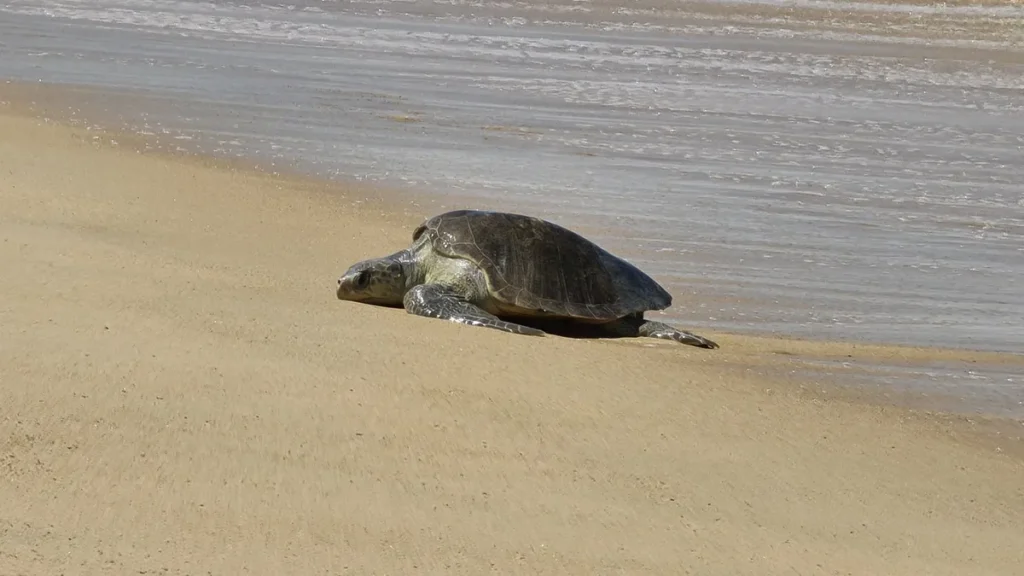
Some afternoons you want a beach you can walk to without planning it. That is Tortuga. You come out of Ojochal past the turtle reserve and the sand opens long and flat in both directions, the town’s own beach, and it goes quiet about five minutes into the walk. Olive ridley turtles gave it the name.
You may see a nesting female or a hatchling release if your dates land inside the season and the reserve is working that night, and a release means hatchlings crossing wet sand toward the sound of the water while somebody counts them out.
Reserva Playa Tortuga lifts most nests into a protected hatchery at the edge of the village and watches it around the clock, more than 140 nests and over 5,000 hatchlings across its past two seasons. Tell us your dates and we will find out what is running while you are here.
Walk south from the parking area and the sand ends in the estuary of the Térraba River, where the surf noise drops off and the water goes still and the birds work the edges. Explore Uvita calls this a spot for birders, and the estuary is where they are.
Nothing here depends on the tide, so you can come at the end of the day and stay for the sunset.
When to go: Any hour, but the late-afternoon is wonderful, when the light goes long over the estuary at the end of the day. For turtles, come between July and December.
Getting there: You leave from the edge of town, pass the reserve, and stay on pavement to the parking area. This is the one you reach without planning your day around it.
Playa Uvita and the whale tail at Marino Ballena
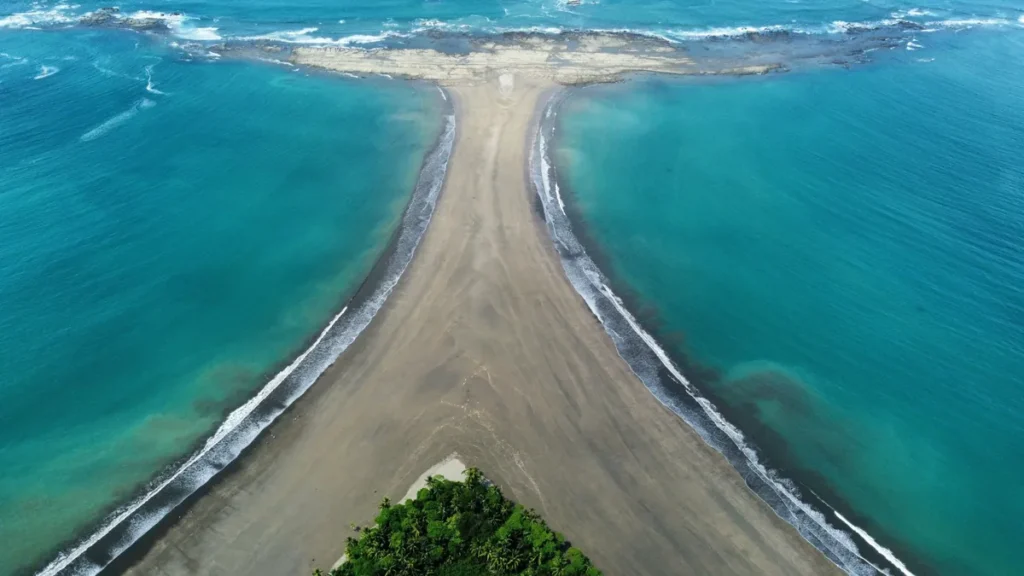
You might have seen the photograph, the one taken from the air with the sandbar shaped like a whale’s tail. Marino Ballena National Park is famous for its one-of-a-kind sandbar, and no visit to Ojochal is complete without taking in the iconic sight on foot.
If you’re up for the walk, we recommend exploring the sand that runs out into the Pacific and widens into that tail, soaking in the ocean views on both sides. The 2026 guide from Costa Rica Divers puts the walkable window at roughly two hours either side of the low, which is when you go. At high tide, there’s no sandbar to walk!
Humpbacks pass through our ocean from July to October, and the boats go out from the same water you just walked on. Whale watching in Costa Rica out of this bay is a morning on a boat, so it is a different day out from the sandbar walk. You may see mothers and calves close in during those months, and you may see a flat empty ocean.
When to go: Go around low tide for the sandbar, and between July and October for the whales.
Getting there: You drive up the coast to Uvita on the Costanera Sur. The park is gated and you pay the entry fee at the gate. (Keep driving north through Uvita and Dominical and the coast opens out into longer beaches with heavier surf.)
Good to know: The park is divided into sectors, separately gated stretches of the national park that keep their own hours through the year, and the Ballena sector closes earliest. We have written up the sectors, the walk and the boat trips properly in the whale tail park from our villas and where to stay for whale season.
Let Ojochal Gardens help you plan the perfect beach day
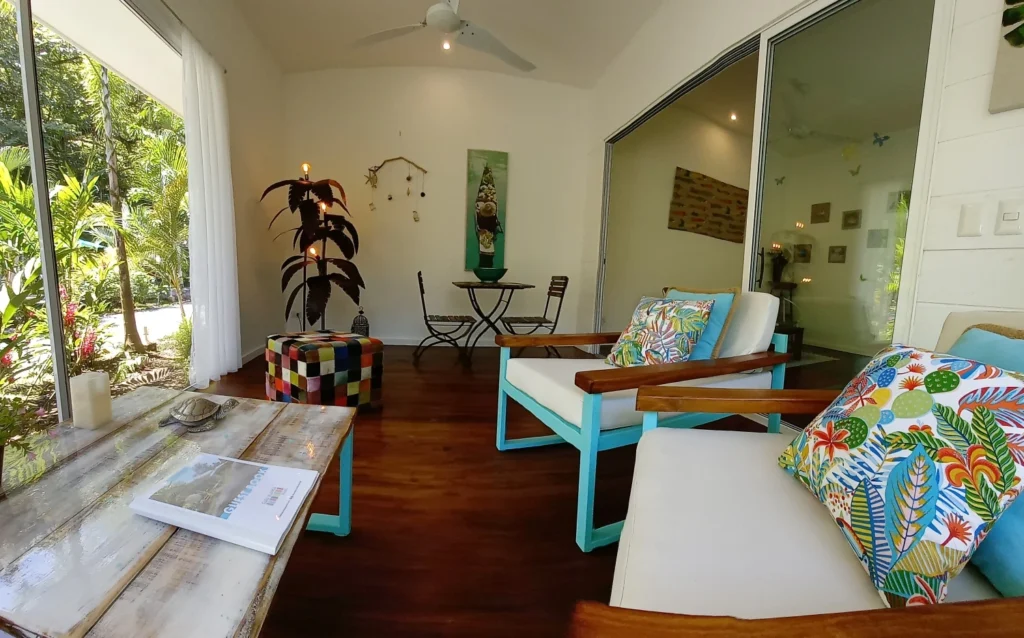
Your stay here is built around what you want out of it, and whether that is three nights or two weeks, reception will help you plan it. On this coast the timing is most of the work, from catching Ventanas at low tide so the caves are open, to the whale boats leaving Marino Ballena between July and October, to the olive ridleys coming ashore at Tortuga from July into December. Tell us which of the three matters most to you and Mariana starts on it before you arrive.
Come back salty and the shared pool and courts are steps from your villa, the perfect way to end a day after the beach!
Look through the villas and suites, room for two up to six, and pick the one that fits your group. Every one of them puts these three beaches within a short drive from your door.
Ready to book your stay? Check availability for your dates, and we’ll help you plan the rest.
Frequently Asked Questions
Can you swim at Playa Ventanas?
The waves run small to medium with rip currents, enough to make a real swim hard work, and riptides come and go along this stretch of coast through the year. Bring a boogie board and the waves suit it.
Is there a lifeguard at Playa Ventanas?
Do not plan around one. Cover is occasional, mostly weekends and holidays when the local families come down. Watch your own group, and watch hardest at the north end where the caves open on the ocean side.
When can you go inside the sea caves?
At low tide, and check the chart first. The caves tunnel deep into the hillside and open again on the ocean side, so waves come through without warning once the tide turns, and there have been drownings here.
Do you need a 4×4 to get to Playa Ventanas?
Usually no. The access road off the Costanera is dirt with a small creek crossing, and a normal car handles it in the dry months. In the rainy season, when the crossing comes up, a 4×4 is the safer choice.
Is this the same Playa Ventanas as the one in Guanacaste?
No. This one is in Puntarenas Province on the south Pacific coast of Costa Rica, and it is the one with the caves. Guides write it both ways, Playa Ventanas and Ventanas Beach, and it is the beach near Uvita people mean when they say the one with the caves. The name comes from two openings in one rock face, since ventanas means windows. Costa Rica’s other Playa Ventanas is a different beach entirely. That one sits in Guanacaste Province beside Playa Grande, several hours north, with no caves at all.
Is Playa Ventanas worth visiting?
Yes, and the caves are the reason. Less than 500 meters of dark sand, two caves at the north end you can walk into at low tide, and tide pools at the southern end the kids find on their own. Among the beaches in Costa Rica worth planning a morning around, this one asks only for a tide chart.